
Views: 0 Author: Site Editor Publish Time: 2025-12-29 Origin: Site
Submerged Arc Welding (SAW) flux granules are produced and discharged at extremely high temperatures, typically in the range of 700–800 °C. Before these granules can be safely handled, conveyed, and packed into 25 kg bags, their temperature must be reduced to approximately 50 °C under strictly controlled conditions.
Because SAW flux is hygroscopic in nature, exposure to moisture can severely affect product quality, flowability, and welding performance. For this reason, a fluid air cooler using a completely dry cooling system is the preferred and most reliable solution.
Cooling hot SAW flux granules presents several technical challenges:
Extremely high inlet temperature
Sensitivity to moisture and ambient humidity
Risk of agglomeration or caking during cooling
Requirement for uniform cooling to avoid thermal stress
Safe handling temperature for downstream packaging
Conventional water-based or wet cooling systems are unsuitable, as even minimal moisture absorption can compromise the flux chemistry and shelf life.
Hot Flux Inlet
SAW flux granules enter the fluid air cooler at 700–800 °C directly from the production or fusion stage.
Fluidized Cooling Zone
Ambient or conditioned dry air is introduced from below, fluidizing the granules and maximizing heat transfer.
Controlled Heat Removal
Heat is removed by convection as the granules remain in motion, preventing hot spots and particle sticking.
Discharge at Safe Temperature
Cooled flux is discharged at approximately 50 °C, suitable for conveying, screening, and packaging into 25 kg bags.
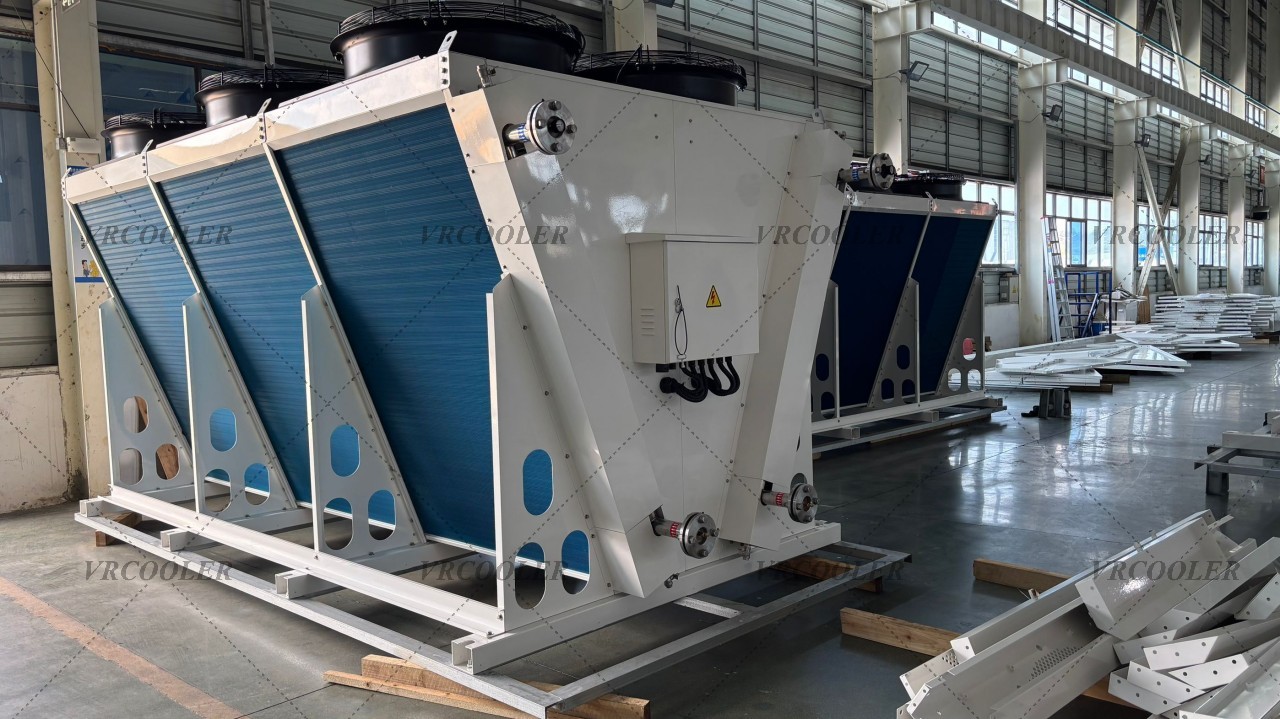
1. Completely Dry Cooling Process
No water, sprays, or indirect moisture exposure, making it ideal for hygroscopic materials.
2. Uniform and Gentle Cooling
Fluidization ensures even temperature reduction without damaging particle structure.
3. High Thermal Efficiency
Large air-solid contact area allows rapid cooling from extreme temperatures to safe handling levels.
4. Improved Product Quality
Prevents contamination, oxidation, and moisture pickup.
5. Safe and Efficient Packaging
Material exits the system at ~50 °C, enabling direct transfer to weighing and 25 kg bagging systems.
A fluid air cooler for SAW flux granules typically includes:
High-temperature resistant construction
Wear-resistant internal surfaces
Controlled airflow distribution plates
Dust extraction and filtration system
Insulated housing to minimize heat loss to surroundings
Optional integration with heat recovery systems can further improve energy efficiency.
Each fluid air cooler can be custom-designed based on:
Inlet and outlet temperature requirements
Granule size and bulk density
Production throughput
Ambient conditions
Dust control and environmental regulations
This ensures reliable performance and seamless integration into existing production lines.

