
Views: 0 Author: Site Editor Publish Time: 2026-01-20 Origin: Site
With the rapid increase in rack power density and the adoption of direct-to-chip and liquid-cooled server architectures, data centers require cooling systems that are highly reliable, energy-efficient, and compliant with international pressure equipment regulations.
The PED (2014/68/EU) Certified Dry Cooler has become a critical component in modern data center liquid cooling systems, providing chilled or cooled water to IT racks year-round, in both summer and winter conditions.
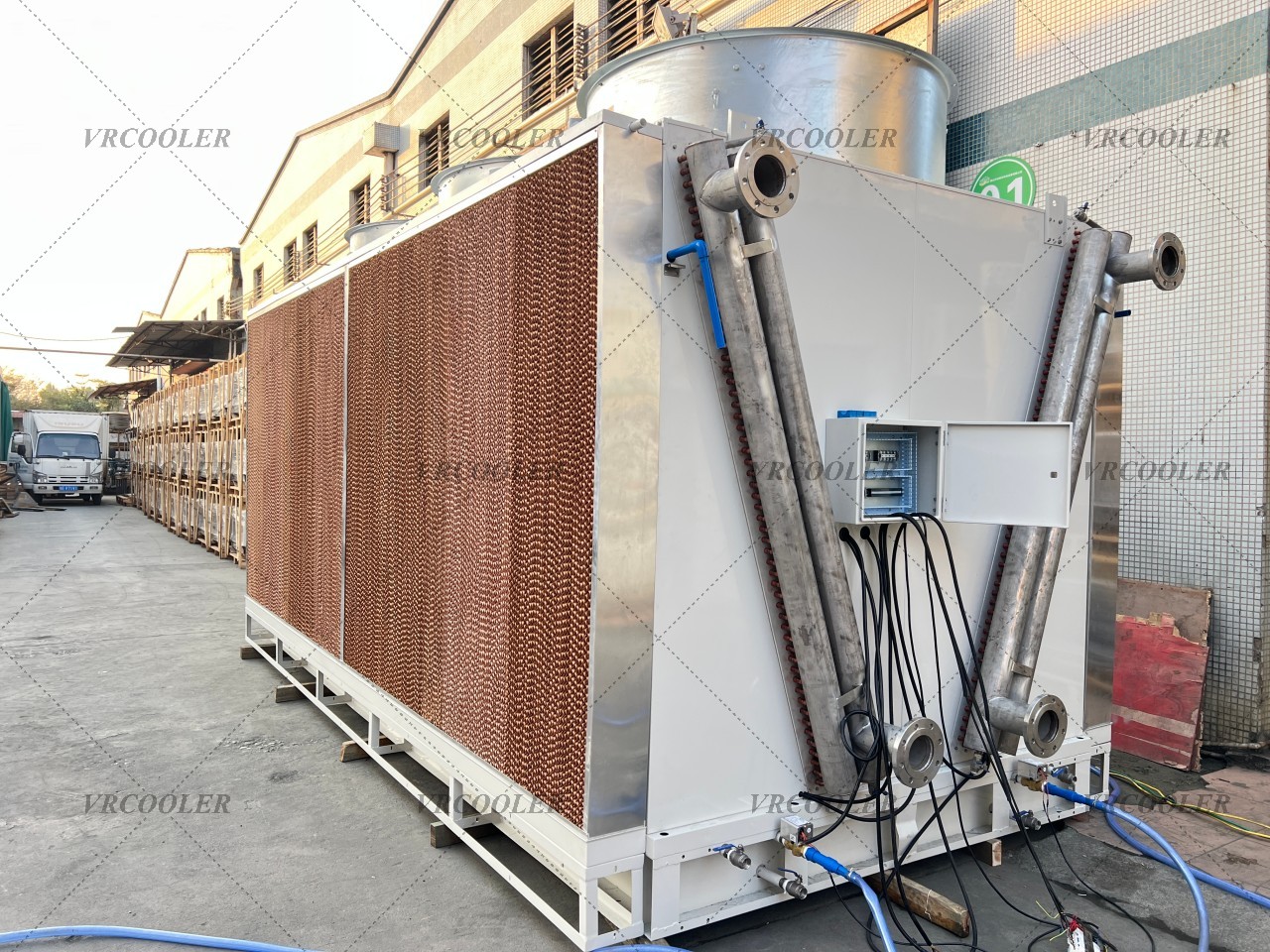
A dry cooler is an air-cooled heat rejection unit that dissipates heat from a closed-loop water or water–glycol system directly to ambient air, without evaporative water consumption.
When certified according to PED 2014/68/EU, the dry cooler and its pressure-bearing components (coils, headers, manifolds) are designed, manufactured, inspected, and tested to meet European Pressure Equipment Directive requirements, ensuring:
Mechanical strength and pressure safety
Full traceability of materials
Certified welding procedures and NDT inspection
Factory pressure testing and documentation
This is especially important for data centers in Europe or projects that follow EU compliance standards globally.
In a typical liquid-cooled data center, the dry cooler operates as the primary or secondary heat rejection device, connected to:
Cold plate cooling loops (CPU / GPU direct liquid cooling)
Rear Door Heat Exchangers (RDHx)
Immersion cooling heat exchangers
Facility water loops (FW / CDU secondary side)
Summer operation:
Fans force ambient air across finned heat exchanger coils to remove heat from the warm return water, maintaining stable supply temperatures.
Winter operation (Free Cooling):
Low ambient temperatures allow the dry cooler to operate with minimal fan speed or even fan-free modes, significantly reducing energy consumption.
Utilizes ambient air instead of compressors
Ideal for low supply water temperatures (e.g. 15–30°C)
Excellent for free cooling in cold and temperate climates
Fully compliant with PED 2014/68/EU
Suitable for high-pressure liquid cooling loops
Meets data center safety and audit requirements
Designed for continuous 24/7 operation
Stable performance in extreme summer heat and winter cold
Compatible with glycol mixtures for freeze protection
Easily scaled for MW-level data centers
Multiple units can operate in parallel or N+1 redundancy
Ideal for phased data center expansion
100% dry operation
No water treatment, drift, or scaling issues
Environmentally friendly and suitable for water-scarce regions
Heat exchanger coils: Copper tubes with aluminum fins or stainless steel options
Design pressure: Customized according to CDU / facility loop requirements
Fans: EC axial fans with stepless speed control
Control strategy: Integrated with BMS / DCIM systems
Noise optimization: Low-noise fan profiles for urban data centers
Anti-freeze design: Glycol solutions, intelligent fan control, and drain options
PED Certified Dry Coolers are widely used in:
AI & HPC data centers with high heat flux
Hyperscale data centers using liquid cooling
Edge data centers requiring compact and efficient cooling
Retrofit projects upgrading from air cooling to liquid cooling
They can function as:
Primary heat rejection units
Backup coolers for chiller systems
Standalone free-cooling solutions in cold climates
For data center operators and EPC contractors, choosing a PED certified dry cooler means:
Compliance with EU and international regulations
Higher system safety and long-term reliability
Lower operational costs through free cooling
Future-proof compatibility with next-generation liquid-cooled IT equipment
As data centers continue to evolve toward high-density liquid cooling, the PED Certified Dry Cooler plays a vital role in delivering safe, efficient, and year-round chilled water to server racks.
By leveraging ambient air in both summer and winter, it provides a sustainable, compliant, and energy-efficient cooling solution for modern data center infrastructure.

