
Views: 0 Author: Site Editor Publish Time: 2026-03-03 Origin: Site
Hydrogen cooling is a proven and highly efficient method for large turbogenerators. For generators such as the ТВФ-125-2У3, which operate at high power density and continuous load, a hydrogen cooler is a critical auxiliary system that ensures thermal stability, electrical efficiency, and long-term operational reliability.
The ТВФ-125-2У3 is a hydrogen-cooled synchronous turbogenerator widely used in thermal power plants and industrial cogeneration units. With a rated output of approximately 125 MW, it generates significant losses in the stator windings, rotor, core, and structural components. Effective heat removal is essential to maintain insulation life and prevent derating.
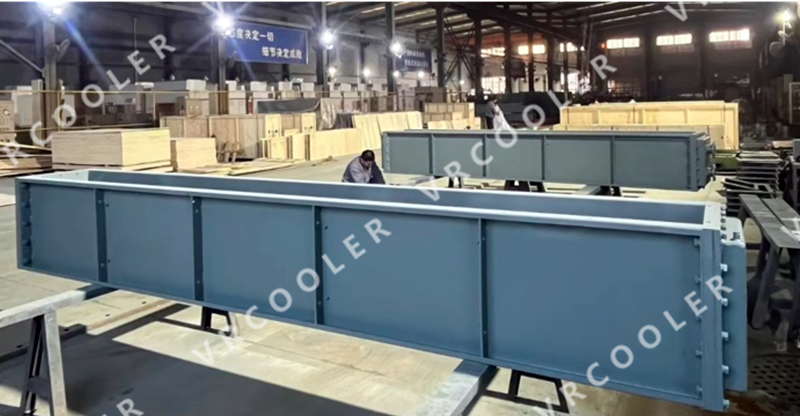
A hydrogen cooler is a gas-to-water heat exchanger installed within the generator cooling circuit. Its primary functions are to:
Remove heat from circulating hydrogen gas
Maintain hydrogen temperature within design limits
Stabilize generator electrical and mechanical performance
Support high-efficiency operation under base-load conditions
Hydrogen is used as the cooling medium due to its high thermal conductivity, low density, and low windage losses compared with air.
Heat generated inside the generator is absorbed by circulating hydrogen.
Hot hydrogen flows through the hydrogen cooler heat exchanger.
Cooling water passes through tubes, while hydrogen flows over the external tube surface.
Heat is transferred to the cooling water and discharged to the plant cooling system.
Cooled hydrogen is recirculated back into the generator.
This closed-loop system ensures clean, stable, and efficient heat dissipation.
A hydrogen cooler suitable for the ТВФ-125-2У3 generator is typically designed with the following features:
Tube bundle hydrogen coolers
Horizontal or vertical configuration, matching OEM layout
Removable tube bundles for maintenance
Tubes: Stainless steel (SS304 / SS316L) or copper-nickel alloys
Tube sheets: Stainless steel or carbon steel with corrosion protection
Casing: Carbon steel with anti-corrosion coating
Material selection ensures compatibility with demineralized cooling water and hydrogen atmosphere.
Typical design considerations include:
Hydrogen inlet temperature: 45–60 °C
Hydrogen outlet temperature: 35–45 °C
Cooling water inlet temperature: ≤ 32 °C
Design pressure: Suitable for generator hydrogen pressure class
Heat removal capacity: Matched to generator losses at full load
Exact sizing is customized based on plant cooling water conditions and generator duty cycle.
Hydrogen cooler systems for turbogenerators incorporate:
Leak-tight tube-to-tube sheet joints
Pressure-tested tube bundles
Smooth internal surfaces to avoid hydrogen stagnation
Compatibility with hydrogen purity and sealing oil systems
High manufacturing quality is essential to prevent hydrogen-to-water leakage and ensure safe operation.
For power plant operators, ease of maintenance is a key requirement:
Withdrawable tube bundles simplify inspection and cleaning
Tube-side cleaning using mechanical or chemical methods
Long service intervals with proper water quality control
Well-designed hydrogen coolers can operate reliably for decades with routine maintenance.
High cooling efficiency with compact design
Reduced windage and ventilation losses
Improved generator efficiency and output stability
Extended insulation and component life
Proven technology for large-capacity turbogenerators
A properly engineered hydrogen cooler for the ТВФ-125-2У3 turbogenerator is essential for safe, efficient, and continuous power generation. By combining robust heat exchanger design, suitable materials, and precise thermal sizing, hydrogen coolers ensure optimal generator performance and long-term reliability in demanding power plant environments.

