
The main advantages of elliptical finned tube heat exchangers stem from their optimized tube geometry and enhanced air-side performance. Compared with conventional round tube designs, they offer the following key benefits:
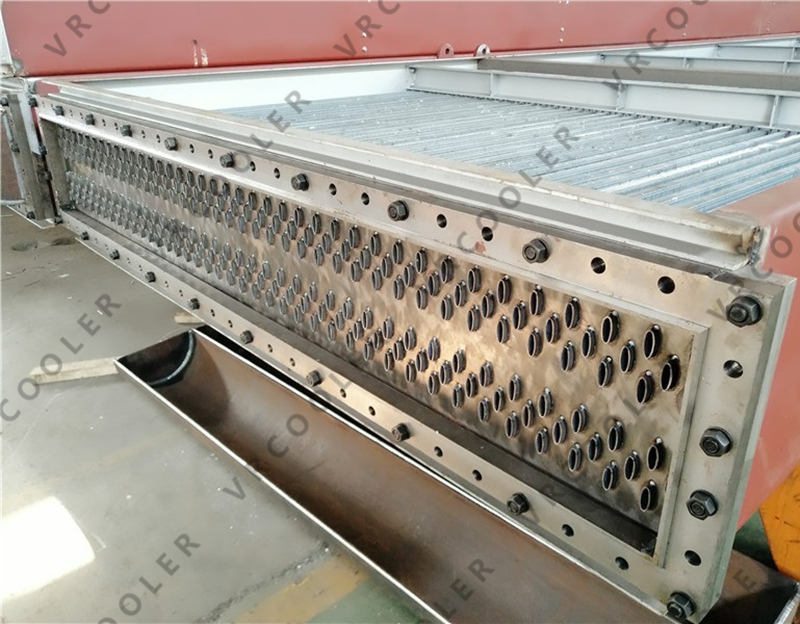
1. Lower Air-Side Pressure Drop
The streamlined elliptical tube shape reduces flow separation and wake formation, resulting in significantly lower air resistance. This allows for:
Reduced fan power consumption
Lower operating and energy costs
Improved system efficiency
2. Higher Heat Transfer Efficiency
Elliptical tubes promote more uniform airflow across the finned surface, improving convective heat transfer. This enables:
Higher thermal performance at the same airflow
Smaller heat exchanger size for the same duty
Better performance in compact installations
3. Energy Savings and Improved System Efficiency
Due to reduced pressure drop and enhanced heat transfer, systems using elliptical finned tube heat exchangers achieve:
Lower electrical energy demand for fans
Higher overall heat exchanger effectiveness
Improved lifecycle cost performance
4. Reduced Noise and Vibration
The aerodynamic tube profile minimizes vortex shedding, which leads to:
Lower operational noise levels
Reduced vibration on tube bundles and supporting structures
Improved reliability and longer service life
5. Compact and Lightweight Design
Higher efficiency allows for:
Fewer tube rows or reduced fin surface area
Smaller footprint and lower weight
Easier integration into existing systems or retrofits
6. Improved Mechanical Stability
Elliptical tubes experience lower aerodynamic forces, contributing to:
Reduced tube fatigue
Enhanced resistance to flow-induced vibration
Increased durability in high-air-velocity applications
7. Wide Range of Industrial Applications
These heat exchangers are well suited for demanding applications such as:
Power generation and CHP systems
Gas engine and compressor cooling
Industrial air coolers and heaters
Waste heat recovery systems
Summary
Elliptical finned tube heat exchangers combine high thermal efficiency, low pressure drop, energy savings, reduced noise, and compact design, making them an ideal solution for modern industrial and HVAC applications where performance and operating cost optimization are critical.

