Views: 0 Author: Site Editor Publish Time: 2026-04-03 Origin: Site
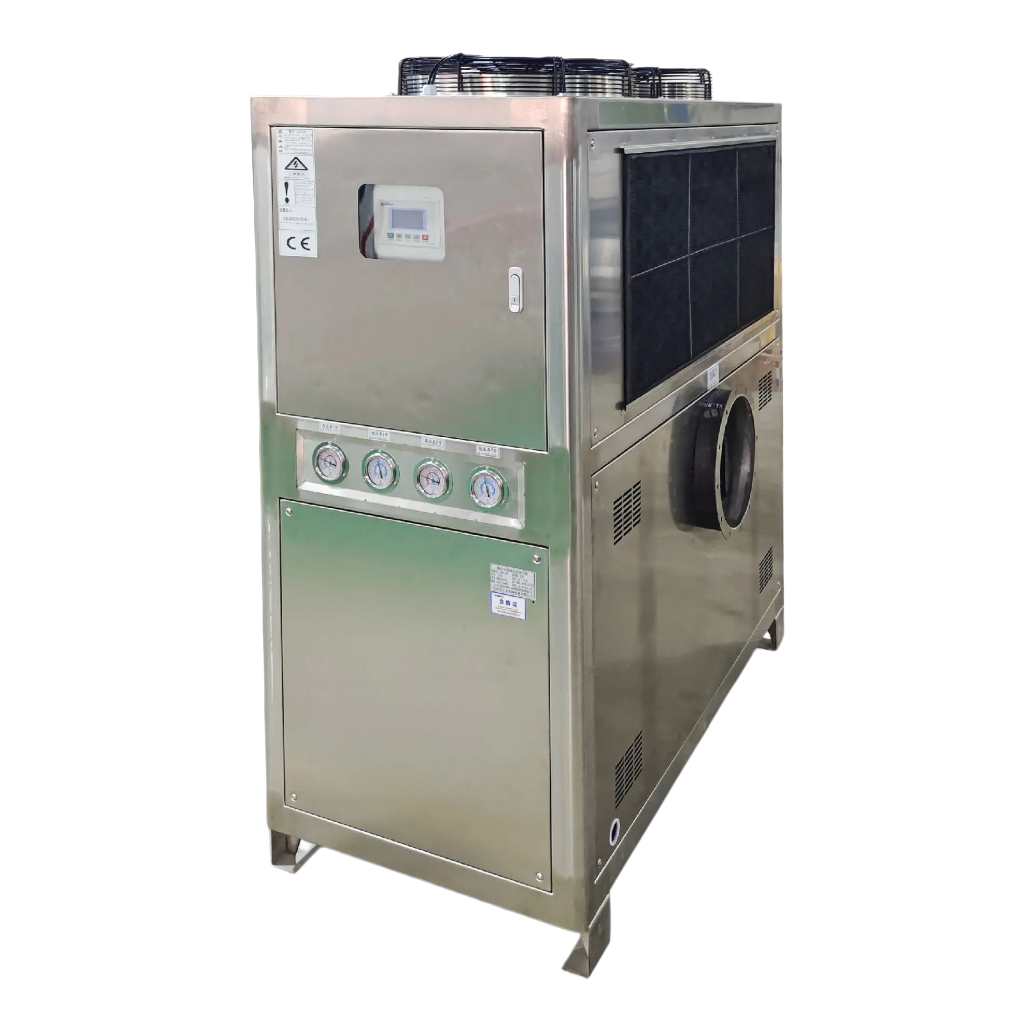
A grain cooler in a seed storage facility works by cooling the air first and then pushing that conditioned air through the stored seed mass. The purpose is to remove heat from the seeds and keep the storage temperature stable.
Here is how it works in practice:
1. Air is drawn into the cooling unit
The system takes in ambient air from outside or from the storage area.
2. The air is cooled, and often partially dried
Inside the grain cooler, the air passes over a refrigeration heat exchanger. This lowers the air temperature, and in many cases it also reduces the moisture risk by bringing the air to a more suitable condition for storage.
3. The cooled air is forced into the seed bulk
Fans push the conditioned air through ducts, perforated floors, or aeration channels into the stored seeds. As the cool air moves through the seed mass, it absorbs heat from the product.
4. Heat is removed from the storage mass
The seeds gradually lose heat to the moving air. This lowers the overall seed temperature and helps eliminate warm zones inside the bin or storage room.
5. The system maintains a more uniform storage condition
By circulating cool air through the stored seeds, the grain cooler helps prevent hot spots, reduces moisture migration, and slows down respiration, insect activity, and mold risk.
In seed storage, this is important because seeds are more sensitive than ordinary grain. Lower and more stable temperatures help protect germination rate, vigor, and storage life.