
Views: 0 Author: Site Editor Publish Time: 2026-03-27 Origin: Site
The rapid growth of renewable energy and grid stabilization projects has driven strong demand for battery energy storage systems. As these systems become larger and more power-dense, thermal management is now one of the key engineering challenges. One important solution in this field is the closed-circuit fluid cooler.
A closed-circuit fluid cooler is used in the liquid cooling thermal loop of a BESS to remove unwanted heat from the coolant and discharge it to outdoor air. It forms an important bridge between the battery cooling loop and the surrounding environment, helping the energy storage system operate within a safe and efficient temperature range.
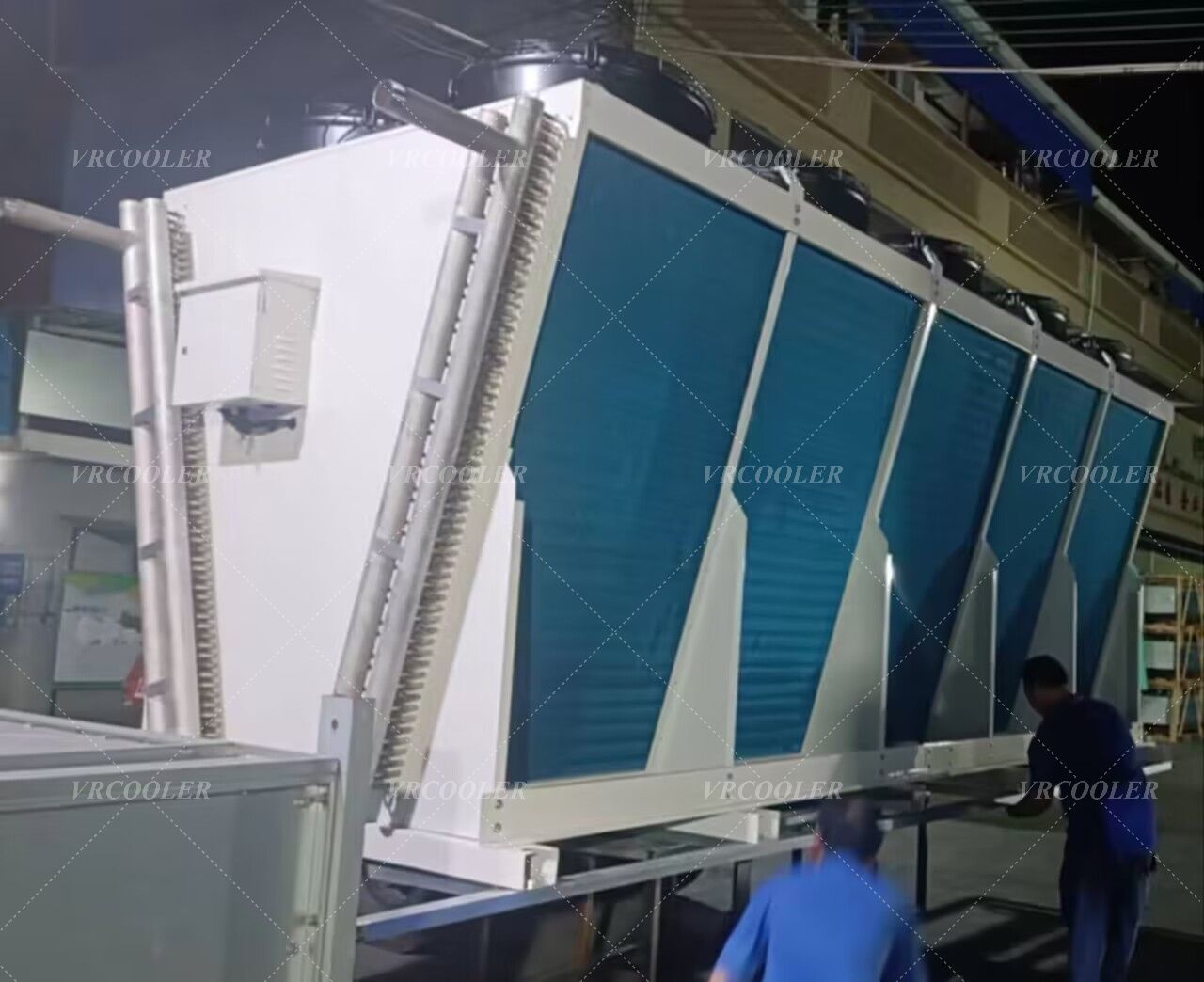
Liquid cooling is becoming more common in battery storage because it offers better heat removal than simple air circulation. It allows heat to be collected directly from battery modules, busbars, or power electronics with more stable thermal control. This is especially important in high-capacity systems where temperature uniformity affects both performance and battery life.
However, liquid cooling cannot work alone. The heat absorbed by the coolant must still be rejected outside the battery enclosure. A closed-circuit fluid cooler handles this final stage of heat removal.
A major reason is system cleanliness and control. Because the cooling fluid circulates in a closed loop, the thermal system is better protected from contamination. This helps maintain coolant quality and reduces corrosion or fouling risk inside the battery cooling circuit.
Another reason is energy efficiency. A properly designed closed-circuit fluid cooler can work with variable fan speed and optimized coil sizing to reduce auxiliary power use. In BESS operation, this matters because every part of the cooling system affects total system efficiency and operating cost.
The third reason is modular suitability. Battery energy storage projects are often containerized or skid-mounted. Closed-circuit fluid coolers can be designed in modular form, making them easier to transport, install, and connect on site.
Using a closed-circuit fluid cooler in BESS liquid cooling can provide:
reliable heat rejection for outdoor applications
reduced water consumption
better compatibility with water-glycol loops
stable thermal performance in continuous-duty service
simpler maintenance compared with evaporative systems
easier integration with modular battery containers
For developers and EPC contractors, these advantages support both technical performance and practical installation.
The performance of a closed-circuit fluid cooler in BESS depends on proper selection. Important parameters include:
battery system heat load
design ambient temperature
coolant flow rate
target supply and return temperature
fan control method
material and coating for corrosion protection
noise limit near the installation site
redundancy requirement for critical applications
In hot climates, the cooler may need larger surface area or more fan capacity to keep coolant temperature within acceptable range. In cold climates, glycol concentration and freeze protection must also be considered.
As battery storage technology develops, thermal systems are also becoming more advanced. There is growing demand for high-efficiency, low-noise, smart-controlled cooling equipment. Closed-circuit fluid coolers are increasingly expected to support remote monitoring, predictive maintenance, and precise response to changing load conditions.
This means future BESS cooling equipment will not only remove heat, but also contribute to better energy management and overall plant reliability.
A closed-circuit fluid cooler is an important part of modern BESS liquid cooling thermal design. It helps remove heat efficiently, protects battery performance, and supports long-term reliability in outdoor energy storage applications. As battery projects continue to expand in scale and complexity, this type of cooling solution will remain a key part of advanced thermal management.

