
Views: 0 Author: Site Editor Publish Time: 2026-03-26 Origin: Site
An air cooled heat exchanger is an important heat rejection component in a power plant ORC system. In an Organic Rankine Cycle, low-grade or medium-temperature heat is converted into electricity through a closed thermodynamic process. After the working fluid expands through the turbine, it must be cooled and condensed before returning to the evaporator. This is where the air cooled heat exchanger plays a key role.
By rejecting heat directly to ambient air, this type of cooling equipment helps maintain stable condensation conditions without relying on cooling towers or large water systems. That makes it especially suitable for ORC power plants in remote areas, dry climates, and industrial waste heat recovery sites.
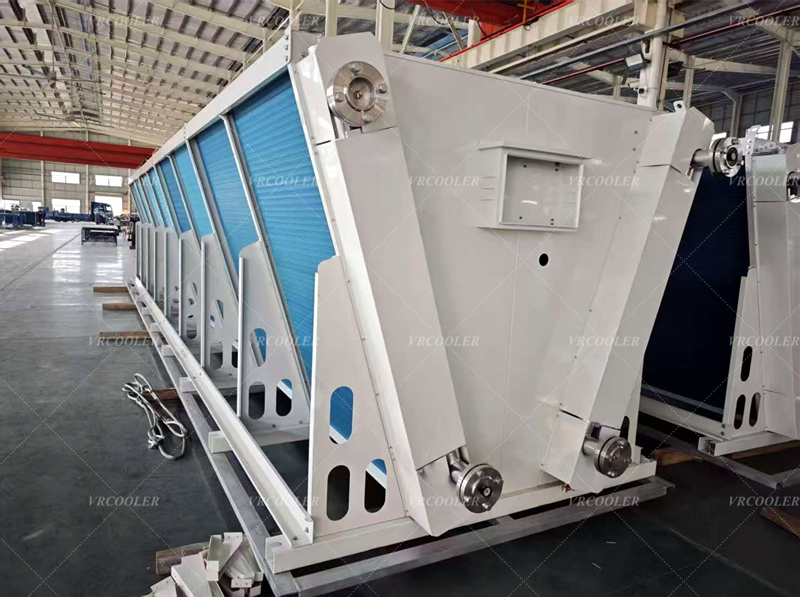
In an Organic Rankine Cycle, the working fluid absorbs heat from a heat source such as biomass combustion, geothermal energy, engine exhaust, or industrial waste heat. The fluid vaporizes, drives the turbine, and then enters the condenser stage.
The air cooled heat exchanger helps remove heat from the condenser side so the vapor can return to liquid form. This step is essential because the condensing temperature has a direct effect on turbine back pressure and overall cycle efficiency.
One major advantage is reduced water dependence. Many ORC plants are built in locations where water supply is limited or where water treatment adds cost and complexity. An air cooled heat exchanger avoids continuous water use and simplifies plant utility requirements.
Another benefit is easy outdoor installation. These units are commonly mounted in open plant areas and connected to the ORC condensing system with relatively simple piping arrangements. This helps reduce infrastructure complexity for decentralized power generation projects.
A further advantage is low maintenance operation. Since there is no open evaporative cooling loop, operators avoid problems such as scaling, biological growth, and water chemistry management.
When selecting an air cooled heat exchanger for an ORC power plant, key design factors include:
condenser heat rejection load
working fluid condensing temperature
design ambient temperature
airflow requirement
fan power consumption
allowable pressure drop
site altitude
noise control requirement
corrosion protection for outdoor conditions
Because ORC efficiency is strongly influenced by condenser performance, proper sizing is essential.
Air cooled heat exchangers are widely used in:
biomass ORC power plants
geothermal ORC systems
industrial waste heat recovery projects
gas engine exhaust ORC systems
solar thermal ORC units
These applications often require stable and reliable heat rejection under varying outdoor conditions.
Using an air cooled heat exchanger in an ORC plant offers several advantages:
no continuous cooling water demand
reliable condensing performance
simplified plant design
lower maintenance workload
good suitability for remote installations
support for energy-efficient and sustainable power generation
An air cooled heat exchanger is a practical choice for heat rejection in a power plant ORC system. It helps condense the working fluid, stabilize cycle efficiency, and reduce dependence on water-based cooling systems. For biomass, geothermal, and waste heat recovery power plants, it is an effective solution for reliable and sustainable ORC operation.

